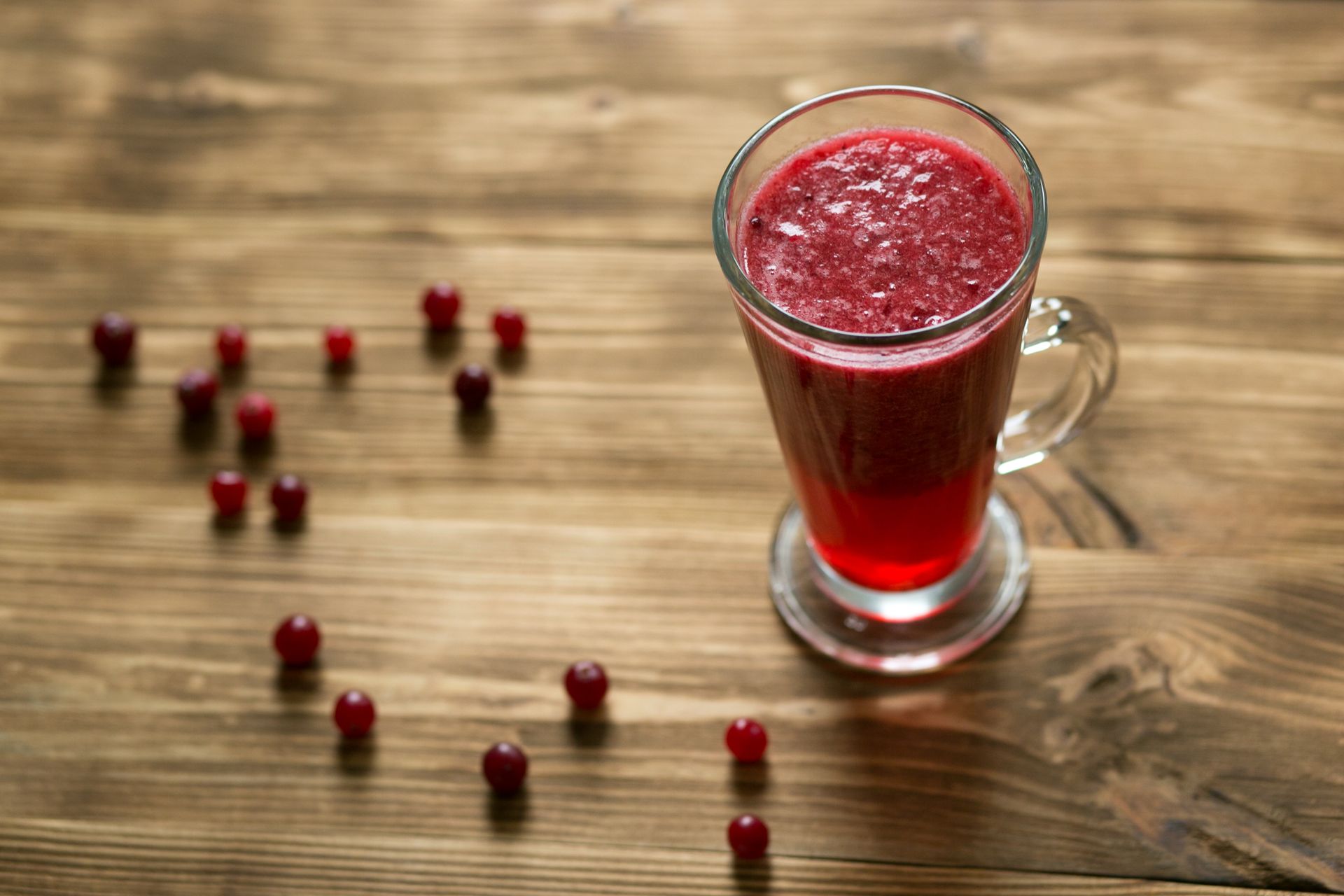
Cranberry juice is best known for its tart taste and its long link to urinary tract health. A new study from the University of Illinois Chicago (UIC) looks at a different part of the body: your teeth.[1][2]
Researchers at UIC’s College of Dentistry found early signs that swishing with pure, unsweetened cranberry juice may slow the regrowth of dental plaque and cut the acid it makes.[2] The findings were published in October 2026 in the journal Scientific Reports.[1] Here is what the team did, what they found, and what it does and does not mean for you.
Why plaque matters
Dental plaque is a sticky film of bacteria that builds up on teeth. Those bacteria feed on the sugars in the food and drinks we have, and they produce acid as they do. Over time, that acid wears down tooth enamel, which can lead to cavities.[3]
So anything that slows plaque down, or makes it produce less acid, is of real interest to dentists.
What the researchers did
The study was led by Christine Wu, a professor of pediatric dentistry at UIC.[2] Many earlier cranberry studies used extracts made in the lab. Wu’s team chose to test real juice in real mouths instead.[2][3]
Here is how the study worked:[2]
- Who took part: 22 people, 14 children and 8 adults.
- Three drinks: each person was randomly assigned one of three drinks: pure, unsweetened 100% cranberry juice; a cranberry juice cocktail with 27% juice and added sugar; or plain water.
- The test: in the morning, researchers took a plaque sample with a cotton swab from one side of the mouth. Each person then rinsed with water and swished three small sips of their drink.
- The follow-up: 30 minutes later, the team took a second plaque sample, this time from teeth that had not been swabbed before.
What they found
In both children and adults, swishing with pure cranberry juice was linked to two results:[2]
- Slower plaque regrowth: plaque exposed to the unsweetened juice appeared to grow back more slowly than plaque that had not been exposed.
- Less acid: plaque made less acid after the juice, which is the process that weakens enamel.
That may surprise anyone who thinks of cranberry juice as sour and acidic. In Wu’s words, most people see it as “very sour, very acidic and sugary,” but “this study found the opposite.”[3]
The university’s releases do not report separate results for the sweetened cocktail or the water, so we can’t say how those groups compared.[2][3]
Why cranberries?
Cranberries are rich in natural plant compounds called proanthocyanidins, or PACs. Researchers have linked PACs to anti-inflammatory effects and to stopping some bacteria, such as E. coli, from sticking to cells.[3] That “anti-stick” effect is one reason cranberries have been studied for urinary tract health for years.
It is a natural question whether something similar happens with plaque bacteria on teeth. This study did not test that directly, so for now it is an idea for future research, not a finding.
You can read more about PACs and the research on cranberries and urinary tract health on our health pages.
Keeping it in perspective
This is promising, early research, and it has real limits:
- It was small: only 22 people took part.[2]
- It was short: the effects were measured 30 minutes after one rinse.[2]
- It did not measure cavities: the study can’t tell us whether drinking cranberry juice regularly prevents tooth decay.[3]
Wu herself has said more experiments are needed to confirm the results.[2]
What this means for you
It is too soon to swap your toothbrush for a glass of juice. But if you already enjoy cranberry juice, the study gives a good reason to be choosy about which kind you buy:
- Go unsweetened: the promising results came from pure, unsweetened 100% cranberry juice.[2] Plaque bacteria feed on sugar,[3] so juice cocktails with added sugar are a different story.
- Read the label: “cranberry cocktail” and “cranberry drink” often contain only a portion of juice plus sweeteners. Look for “100% juice” and “unsweetened.”
- Keep up the basics: brushing, flossing and regular dental check-ups are still the best ways to protect your teeth.
Pure cranberry juice is very tart. Wu has suggested it could one day be used now and then as a mouth rinse, perhaps with a suitable sugar substitute to make it easier to enjoy.[2][3] For tips on choosing between fresh berries, dried cranberries and juice, see our post Fresh Cranberry Season.
The bottom line
A small new study suggests that pure, unsweetened cranberry juice may slow plaque regrowth and reduce plaque acid, in both children and adults. It is an encouraging first step, not proof that cranberry juice prevents cavities. We will keep an eye on this research and share what larger studies find.
Questions about your own teeth are best answered by your dentist. For more cranberry research, recipes and news, follow us on Instagram and Facebook.
Sources
- Wu CD, Li W, Luu M, Kratunova E, Xie Q. In vivo exposure to cranberry juice suppresses dental plaque regrowth and acid production in adults and children: a PGRM study. Scientific Reports, 2026; 16(1).
- University of Illinois Chicago, UIC Today. Cranberry juice may be a boon for oral hygiene (October 20, 2026).
- ScienceDaily. Scientists discover that cranberry juice may help fight tooth decay (October 29, 2026).
This article is for general information only and is not medical or dental advice.