Every fall, cranberry marshes across Canada flood and turn a brilliant red as growers bring in the harvest. For a few short months, fresh cranberries fill the produce aisle. Then, just after the holidays, they disappear until next year.[1]
The good news is that fresh cranberries keep extremely well. With a little know-how, you can enjoy them long after the season ends. In this guide, we cover why cranberries float (and bounce), how to choose the best berries, how to store and freeze them, and simple ways to enjoy them all year.
Why cranberries float (and bounce)
Every cranberry has four tiny air pockets inside. Slice one in half and you can see them. These pockets help wild cranberries float down streams and spread their seeds.[2]
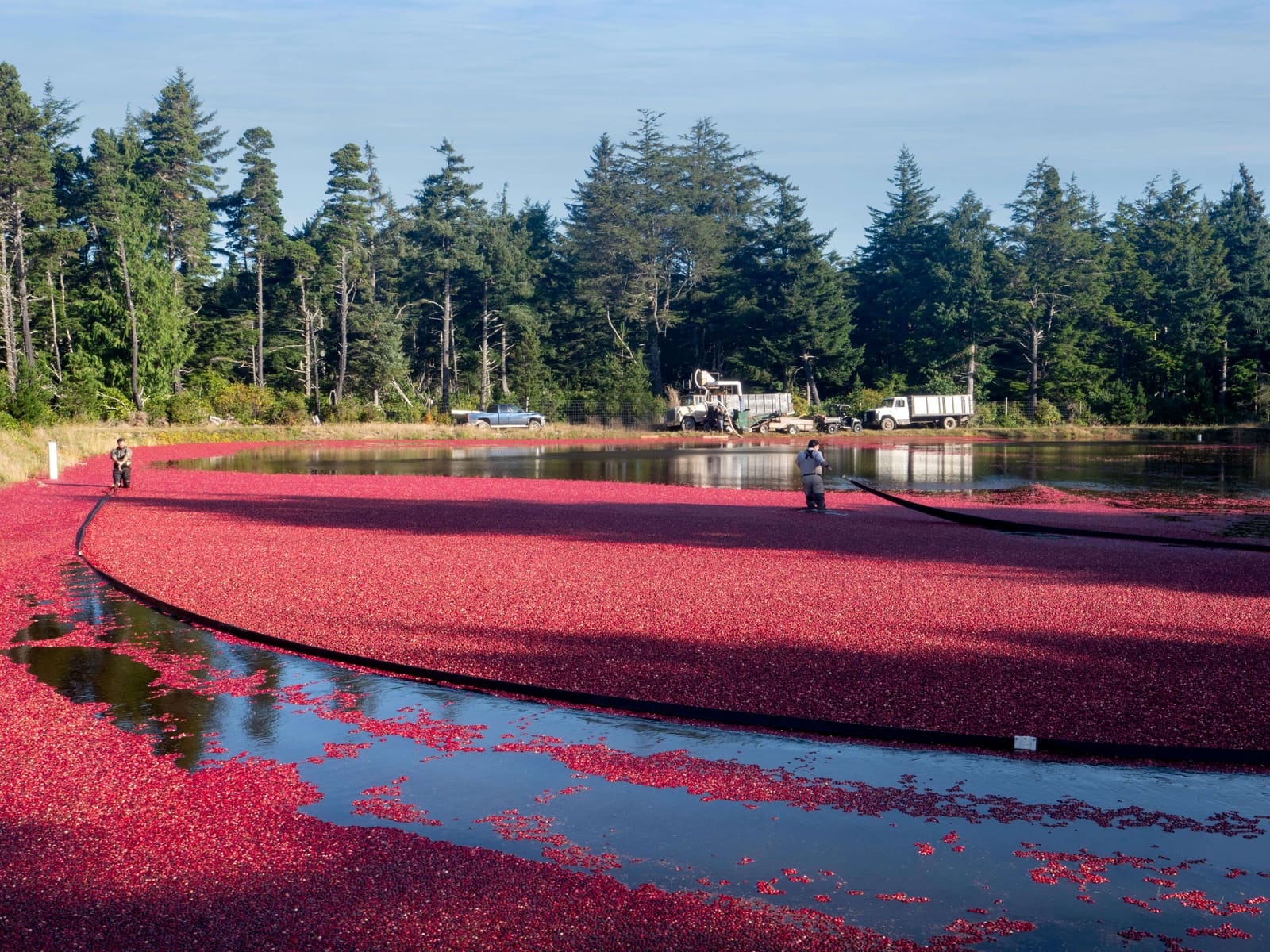
Growers put that buoyancy to work at harvest. Most cranberries are “wet harvested”: the marsh is flooded, the berries are knocked loose from the vines, and they float to the surface to be gathered.[2][3] That’s the sea of red you see in harvest photos.
The fresh berries in your grocery store are usually picked a different way. They are “dry harvested” by machines that comb them off the vines, which is gentler on the fruit. In Massachusetts, only about 5% of the crop is picked this way; the other 95% becomes juice, sauce and dried cranberries.[3]
Those same air pockets make fresh cranberries bounce. Drop a firm, fresh berry on the counter and it springs back up, which is a good sign it’s fresh.[2]
How to pick the best fresh cranberries
Fresh cranberries are usually sold in sealed bags, so you are choosing by eye. Here is what to look for:[1]
- Colour and shine: brightly coloured berries with smooth, glossy skin. Shades vary by variety, from bright red to deep crimson.
- Firmness: plump, firm berries. Skip bags with lots of soft or squashed fruit.
- What to avoid: berries that are shriveled, wrinkled, soft or blemished.
Once you are home, give them the bounce test. Fresh berries bounce when dropped;[1] any that don’t, or that feel soft, can go in the compost.
Handy to know: a standard 12-ounce (340 g) bag holds about 3 cups of cranberries,[1] which is enough for most sauce, muffin and loaf recipes.
How to store them so they last for months
Cranberries are one of the easiest fruits to keep. Unlike delicate raspberries or strawberries, firm cranberries keep for weeks in the fridge and up to a year in the freezer.[1]
In the fridge: Keep them in their original bag in the crisper drawer. They are at their best for about two weeks and can keep for up to four, though more soft berries appear as time goes on.[1] Sort and rinse them just before you use them.
In the freezer: This is the secret to enjoying cranberries all year. You have two options:[1]
- The easy way: Put the unopened bag straight into the freezer. It will keep for up to 12 months.
- The tidy way: Sort out soft berries and stems, rinse, then dry them very well with a clean towel. Leftover water makes the skins blister and the berries clump together. Spread them on a tray to freeze, then move them into a freezer bag or container.
No need to thaw: Frozen cranberries go straight into muffins, loaves, sauces and smoothies. Just rinse them under cold water first.[1]
Tip: fresh cranberries are usually in stores only from October through December.[1] Buying a few extra bags now means you can enjoy them through spring and summer too.
Fresh, dried or juice: what’s the difference?
Cranberries are enjoyed in many forms, and each one fits into a healthy diet in its own way. The biggest differences are sugar and fibre. Here is how a typical serving of each compares, using USDA nutrition data:
| Form | Serving | Calories | Sugar | Fibre | Added sugar |
|---|---|---|---|---|---|
| Fresh or frozen cranberries[4] | 1 cup whole (100 g) | 46 | 4 g | 4 g | None |
| Sweetened dried cranberries[5] | 1/4 cup (40 g) | 123 | 29 g | 2 g | Yes |
| 100% unsweetened cranberry juice[6] | 1 cup (250 mL) | 116 | 31 g | 0 g | None |
Fresh cranberries are naturally low in sugar, with only about 4 grams per cup, and they bring fibre and vitamin C.[4] They are also very tart, which is why many cranberry products are sweetened.
A few simple tips:
- Dried cranberries: Great in salads, oatmeal and trail mix. Stick to a small handful, or look for reduced-sugar versions.
- Juice: Even 100% juice has natural sugar and almost no fibre.[6] Choose 100% or unsweetened juice over “cocktail” drinks, which often add sugar. Mixing it with sparkling water stretches it further.
- Read the label: Compare the sugars per serving on the Nutrition Facts table, and check the ingredient list for added sugars.
For what published research says about cranberries and health, see our health benefits pages.
Easy ways to enjoy cranberries all year
Raw cranberries are very tart, so most people cook them or pair them with something naturally sweet. When cooking, heat them just until they pop; cooking them longer makes them taste more bitter.[7]
- Breakfast: Blend a handful of frozen cranberries into a smoothie, or stir them into oatmeal as it cooks.
- Baking: Fold fresh or frozen berries (no thawing needed) into muffins, loaves and crumbles.[1]
- Salads and bowls: Add fresh or cooked cranberries to green salads, roasted vegetables and whole-grain bowls.[7]
- Savoury dishes: Simmer them into sauces and marinades for chicken, turkey or pork.[7]
- Drinks: Mix 100% cranberry juice with apple or orange juice,[7] or top it up with sparkling water.
Looking for a recipe? Try these from our recipe collection:
- Antioxidant Cranberry Power Smoothie: a bright breakfast bowl with cranberries and yogurt
- Cranberry Oat Streusel Bars: a tart twist on date squares, made with fresh or frozen berries
- Vegan Cranberry Apple Crumble: a cozy, gluten-free fall dessert
- Cranberry Orange Pork Tenderloin: a sweet, tart and savoury main for special occasions
- No-Bake Cranberry Energy Bites: a four-ingredient snack for busy days
See the harvest for yourself
If you are in Ontario, this weekend is the perfect time to see where cranberries come from. The Bala Cranberry Festival runs October 16 to 18, 2026 in Bala, in the heart of Muskoka. It always takes place the weekend after Thanksgiving.[8]
Volunteers have run the festival since 1984. Expect hundreds of arts and crafts vendors, live music, family activities and plenty of cranberry treats. In-town shuttles run throughout festival hours.[8]
For a closer look at the harvest itself, plan a visit to Johnston’s Cranberry Marsh and Muskoka Lakes Winery. Marsh activities are separate from festival admission and must be booked in advance.[8] Check the official festival website for the full schedule and tickets.
Not near Muskoka? Cranberries are grown from coast to coast in Canada. Read our post Canadian Cranberries, Eh? to learn about growers in your region.
Make the most of the season
Fresh cranberries are only in stores for a few months, but a little planning keeps them on your table all year. Pick firm, glossy berries, store them in the fridge or freezer, and add them to the meals you already make.
How do you enjoy fresh cranberries? Share your favourite creation and tag us on Instagram or Facebook. Follow along for more recipes, research and cranberry news all season long.
Sources
- Penn State Extension. Preserving Cranberries.
- Popular Science. Why cranberries bounce and float.
- Cape Cod Cranberry Growers’ Association. Dry Harvest.
- USDA FoodData Central. Cranberries, raw.
- Get Food Facts (USDA data). Cranberries, dried, sweetened.
- Get Food Facts (USDA data). Cranberry juice, unsweetened.
- Utah State University. Ask an Expert: Cranberries, a healthy holiday choice.
- Discover Muskoka. Bala Cranberry Festival.